

In the fast-paced world of stock market trading, mastering intraday trading strategies can significantly enhance your chances of success. Among the myriad options available, focusing on Nifty50 and Banknifty options can offer lucrative opportunities for traders. In this comprehensive guide, we’ll delve into some effective intraday trading strategies tailored specifically for Nifty50 and Banknifty options, helping you navigate the volatile markets with confidence and precision.
Nifty50 and Banknifty Option Intraday Trading Strategies
What is Nifty50?
Nifty50 is a stock market index in India, specifically on the National Stock Exchange (NSE). It comprises the top 50 actively traded stocks from various sectors, chosen based on their market capitalization and liquidity. The Nifty50 index serves as a benchmark for the Indian equity market, reflecting the overall performance and sentiment of the country’s stock market. It is widely tracked by investors, traders, and analysts to gauge the health and direction of the Indian economy.
What is Banknifty?
Banknifty is also a stock market index in India, but it focuses specifically on banking sector stocks. Like Nifty50, it is listed on the National Stock Exchange (NSE) and comprises a selection of the most actively traded banking stocks in the country. Banknifty serves as a barometer for the performance of the banking industry within the Indian stock market. It is closely monitored by investors, traders, and analysts to assess the health and trends within the banking sector, which is a significant component of India’s economy.
What is Option Intraday Trading?
Option intraday trading refers to the practice of buying and selling options within the same trading day, to profit from short-term price movements in the underlying asset or index. Unlike traditional stock trading, where investors buy and hold stocks for an extended period, intraday traders seek to capitalize on price fluctuations that occur within a single trading session.
In option intraday trading, traders can take advantage of the leverage provided by options contracts, which allows them to control a larger position with a smaller amount of capital compared to trading the underlying asset directly. By correctly predicting the direction of price movements, traders can generate profits by buying call options (expecting the price to rise) or put options (expecting the price to fall) and then selling them for a higher price within the same day.
Option intraday trading requires careful analysis of market trends, technical indicators, and volatility levels to identify suitable entry and exit points. Traders must also manage risk effectively by setting stop-loss orders and adhering to strict risk management principles. Due to the fast-paced nature of intraday trading, it demands discipline, quick decision-making, and the ability to adapt to rapidly changing market conditions.
Also learn:
- Option Greeks : Insider Tips to Navigate Market Volatilit y Like a Pro
- Option Buying VS Option Selling: Which is better?
- What Are ITM, ATM, OTM and Which Is Better?
Best Option Intraday Trading Strategies of Nifty50 and Banknifty
Here are the best Option Trading Strategies:
Trend Following Strategies
This strategy involves identifying and trading in the direction of the prevailing trend. Traders look for higher highs and higher lows in an uptrend, or lower lows and lower highs in a downtrend. They enter trades when the price retraces to key support or resistance levels within the trend, using price action signals like bullish/bearish candlestick patterns or trendline breaks for confirmation.

Inside Bar Strategies
This strategy involves looking for two bars on a chart: one larger (outer bar) and one smaller (inner bar) inside it. The inner bar’s high and low fall within the range of the outer bar. Inner bars usually form when the market pauses, and they can signal a possible change in direction.

Experienced traders spot these patterns and try to determine if the inner bar shows the market taking a breather or if it’s indicating a shift in direction.
Breakout and Pullback Strategies
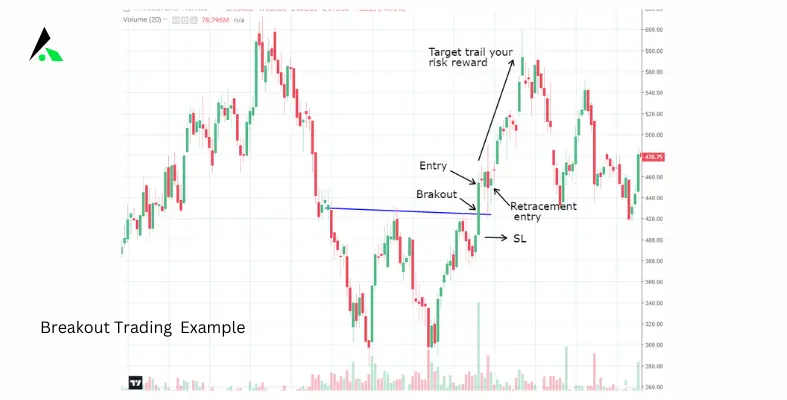
Breakout trading involves entering trades when the price breaks out of a well-defined trading range or consolidation phase. Traders wait for a breakout above resistance or below support levels, accompanied by strong volume and price momentum. They use price action confirmation signals like bullish/bearish engulfing patterns or long candlesticks to confirm the breakout and enter trades in the direction of the breakout.
Option Greeks Analysis
To fine-tune trading decisions, understanding option Greeks is indispensable. Delta, Gamma, Theta, Vega, and Rho quantify the sensitivity of option prices to various factors such as underlying price movements, volatility changes, time decay, and interest rate fluctuations. By analyzing option Greeks, traders can assess risk exposure and portfolio hedging effectively. Moreover, delta-neutral strategies such as straddles and strangles enable traders to profit from volatility spikes irrespective of market direction.
How to trade Nifty50 and Banknifty
Trading Nifty50 and BankNifty involves understanding market dynamics, technical analysis, and risk management. Here’s a basic approach:
- Educate Yourself: Start by learning the basics of trading and familiarize yourself with the unique characteristics of option trading. Understand the risks involved, including volatility, low liquidity, and the potential for price manipulation.
You can read our Book price Action Beginner to Advance to boost your trading knowledge . This book covers basic to advanced price action trading concepts, including trading strategies, candlestick patterns, chart patterns, technical analysis, volume analysis risk management, and trading psychology. you can buy the book from Amazon or Flipkart.
- Open Demat Account: To trade Nifty50 and Banknifty you need to register with a broker through an online brokerage platform .Open India most trusted brokerage Zerodha, Angle One, Groww, etc.
- Market Analysis: Analyze macroeconomic factors, news events, and global market trends influencing Nifty50 and BankNifty. Use technical analysis tools like charts patterns, indicators, and patterns to identify potential entry and exit points.
- Risk Management: Determine your risk Management and allocate capital accordingly. Set stop-loss orders to limit potential losses. Avoid overleveraging and only risk a small percentage of your trading capital on each trade.
- Trading Strategies: Utilize a combination of strategies like breakout, pullback, trend following, and mean reversion. For Nifty50, consider trading options for hedging or speculation based on market sentiment and volatility. Bank Nifty options are popular due to high liquidity and volatility, offering opportunities for both directional and non-directional trading strategies.
- Technical Indicators: Use indicators like Moving Averages, Relative Strength Index (RSI), MACD, and Bollinger Bands to identify trends, overbought/oversold conditions, and potential reversal points.
Learn More Details: What Is an Indicator, How It’s Used In Trading Success?
- Select Your Preferred Options Contract: With a multitude of options available, it’s crucial to conduct thorough research on diverse strategies and stocks. Ensure you’re well-informed about the associated disclosures and assess the risks you’re comfortable taking before committing to a particular direction.
- Determine the Strike Price: The effectiveness of purchasing an option depends on the stock price closing favorably “in the money.” The strike price denotes the price at which the underlying security can be bought or sold (exercised) within your options contract.
- Execute Your Trade: Ultimately, pay the premium and broker commission to secure ownership of the contract. Enter trades based on your predefined strategy and risk parameters. Monitor your positions regularly and adjust stop-loss levels or take profits as per your trading plan. Keep abreast of market news and events that may impact Nifty50 and BankNifty movements.
- Continuous Learning: Stay updated with market trends, economic indicators, and trading strategies. Analyze your trades for strengths and weaknesses, and continually refine your approach.
Remember, trading Nifty50 and BankNifty involves inherent risks, so it’s essential to approach it with discipline, patience, and a well-defined strategy. Consider practicing with a demo account or paper trading before risking real capital.
Also Read:
- Understanding Support and Resistance Trend Analysis
- What is Trendline, How to draw a Trendline, How to It use?
- Mastering Price Action Trading: Unlocking Secrets to Profitable Trades
FAQs:
Which option strategy is best for intraday trading?
The best strategy intraday for nifty and bank nifty is Trend Following. The best option strategy for intraday trading depends on market conditions and trader preferences.
Which is better for option trading NIFTY 50 or Bank NIFTY?
The choice between NIFTY 50 and Bank NIFTY for options trading depends on personal strategy and risk tolerance. NIFTY 50 offers diversified exposure, while Bank NIFTY is more sector-specific.
What is the best stop-loss for Bank Nifty options?
The best stop-loss for Bank Nifty options varies depending on individual risk appetite, market conditions, and trading strategy. Generally, it’s advisable to set stop-loss levels based on technical analysis, support/resistance levels, and predefined risk management rules1:2.
Which indicator has the highest accuracy in option trading?
No single indicator guarantees accuracy in option trading. Traders often combine multiple indicators such as Moving Averages, RSI, MACD, and Bollinger Bands to make informed decisions. The effectiveness of an indicator depends on market conditions and individual trading strategies.
Which option has unlimited loss?
Selling naked call options carries unlimited loss potential. When an investor sells a call option without owning the underlying asset, the potential loss is theoretically infinite as the stock price can rise indefinitely, resulting in unlimited obligation to deliver shares at the strike price.
Which options become zero on expiry?
Options that expire out of the money (OTM) become worthless upon expiry. This applies to both call and put options. Call options expire worthless if the stock price is below the strike price at expiry, while put options expire worthless if the stock price is above the strike price at expiry.
Can I hold options for 2 days?
Yes, you can hold options for 2 days. Options contracts typically have expiration dates ranging from days to years, allowing traders to hold positions for short or long durations. However, it’s crucial to consider factors like time decay and market volatility when holding options for any duration.
Conclusion
Mastering intraday trading requires a combination of technical analysis, fundamental insights, and disciplined execution. By incorporating the aforementioned strategies tailored specifically for Nifty50 and Banknifty options, traders can navigate volatile markets with confidence and unlock profit potential. Remember, continuous learning and adaptation are key to staying ahead in the dynamic world of finance.
Disclaimer: This post is written solely to provide information, so before using any strategy, be sure to research it yourself.

