

Swing trading is one of the most popular trading styles—and for good reason. It strikes a perfect balance between fast-paced day trading and slow long-term investing. If you’ve ever felt overwhelmed watching charts all day or bored waiting months for results, swing trading might be your sweet spot. Learn Powerful Strategies for Swing Trading to spot trends, manage risk, and boost profits with proven techniques, practical tips, and market insights for consistent trading success. Let’s break it all down in a simple, beginner-friendly way.
What Is Swing Trading?
Swing trading is a trading strategy where traders aim to capture short- to medium-term price movements, usually over a few days to several weeks. Instead of chasing tiny price fluctuations, swing traders focus on the “swing” — the natural ups and downs of the market.
Think of the market like ocean waves. Day traders surf every tiny ripple. Long-term investors wait for the tide. Swing traders? They ride the waves in between.
Why Swing Trading Is Ideal for Beginners
Swing trading offers a balanced learning curve, making it one of the most beginner-friendly trading styles.
Advantages of Swing Trading
- Less emotional pressure compared to day trading
- More time to analyse charts and plan trades
- Lower transaction costs due to fewer trades
- Compatible with full-time jobs
We emphasize patience and preparation, ensuring beginners develop professional trading habits early.
What Is Swing Trading and How It Works
Swing trading revolves around identifying market swings, typically driven by momentum, trend continuation, or reversals. Traders analyze price action, technical indicators, and market structure to enter positions at optimal points and exit with predefined profit targets.
Key characteristics of swing trading include:
- Holding trades for 2 to 15 trading sessions
- Using technical analysis as the primary decision-making tool
- Managing risk with strict stop-loss rules
- Targeting high-probability setups instead of frequent trades
Difference Between Swing Trading and Day Trading
Day trading closes all trades within the same day. Swing trading allows positions to remain open overnight or even for weeks. Less pressure, fewer trades, and more time to think.
Swing Trading vs Long-Term Investing
Long-term investors focus on fundamentals and years-long growth. Swing traders focus on technical patterns and short-term momentum. One is a marathon; the other is a series of calculated sprints.
Core Principles of Successful Swing Trading
1. Trend Identification
Trading in the direction of the trend significantly increases success rates. We identify trends using:
- Higher highs and higher lows for uptrends
Lower highs and lower lows for downtrends
Moving averages for confirmation
2. Market Structure Awareness
Understanding support and resistance levels allows traders to spot high-probability entry zones. These levels act as decision points where price reacts repeatedly.
3. Risk-to-Reward Optimization
Every trade must offer a minimum 1:2 risk-to-reward ratio, ensuring profitability even with moderate win rates.
Best Timeframes for Swing Trading
Swing traders typically rely on higher timeframes to reduce noise and false signals.
Recommended timeframes:
- Daily charts for trend direction
- 4-hour charts for trade setups
- 1-hour charts for precise entries
This multi-timeframe approach ensures clarity and consistency.
Powerful Swing Trading Strategies for Beginners
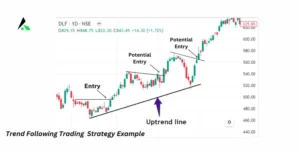
1. Trend Pullback Strategy
This is one of the most reliable swing trading strategies.
How It Works
- Identify a strong trend
- Wait for the price to pull back to support or the moving average
- Enter when the price shows rejection or reversal signals
Indicators Used
- 20 EMA / 50 EMA
- RSI
- Price action patterns
This strategy aligns trades with institutional momentum.
2. Breakout and Retest Strategy
Breakouts indicate strong momentum, but false breakouts trap beginners. The retest strategy solves this problem.
Execution Steps
- Mark a key resistance or support level
- Wait for a clean breakout
- Enter after price retests the level and holds
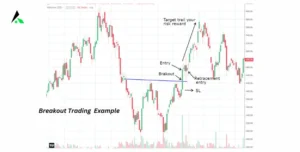
This method provides low-risk, high-reward opportunities.
3. Reversal Swing Trading Strategy
Reversal trades aim to capture trend exhaustion points.
Confirmation Tools
- Divergence
- Exhaustion candles
- Volume spikes
We only take reversals at strong supply or demand zones to minimize risk.
Essential Tools for Swing Trading
Technical Analysis Basics: Swing trading relies heavily on charts, patterns, and indicators. Don’t worry—you don’t need to master everything. A few solid tools are enough.
Best Indicators for Swing Trading
Moving Averages: They smooth price data and help identify trends.
RSI (Relative Strength Index): Helps spot overbought and oversold conditions.
MACD: Great for momentum and trend reversals.
Support and Resistance: Key price levels where markets often react.
Risk Management: The Backbone of Swing Trading
No strategy works without professional risk management.
Golden Risk Rules
- Risk no more than 1–2% per trade
- Always place a stop-loss
- Avoid revenge trading
- Maintain a trading journal
Consistency in risk control ensures long-term survival and growth.
Psychology of Swing Trading
Emotional discipline separates profitable traders from unsuccessful ones.
Key Psychological Traits
- Patience
- Confidence in strategy
- Detachment from outcomes
- Consistency in execution
We follow rules, not emotions.
Building a Swing Trading Routine
A structured routine ensures long-term success.
Daily Routine
- Scan markets after close
- Identify setups
- Set alerts and orders
- Review previous trades
This systematic approach builds professional discipline.
Swing Trading Markets You Can Trade
Swing trading works across multiple markets:
- Stocks
- Forex
- Cryptocurrencies
- Indices
- Commodities
Liquidity and volatility determine suitability.
How Much Capital Do You Need to Start Swing Trading?
You can start with as little as $500–$1,000. What matters more is discipline, not account size.
Conclusion: Mastering Swing Trading Step by Step
Swing trading offers a structured, scalable, and sustainable path for beginners entering financial markets. By focusing on trend alignment, disciplined risk management, and proven strategies, traders can build consistency without unnecessary complexity.
Success in swing trading is achieved through clarity, patience, and execution excellence. We trade probabilities, not predictions.
FAQs On Swing Trading for Beginners |Learn Powerful Strategies for Swing Trading
Is swing trading risky for beginners?
All trading carries risk, but swing trading is safer than day trading when managed properly.
How long does it take to learn swing trading?
Basic understanding takes weeks; mastery takes months of practice.
Do I need indicators to swing trade?
Indicators help, but price action is equally important.
Can I swing trade with a full-time job?
Absolutely. That’s one of its biggest advantages.
Which timeframe is best for beginners?
Daily and 4-hour charts are ideal.
Best Pprice Action Trading Book
You can read our book Price Action Trading Beginner to Advanced to boost your trading knowledge. This book covers basic to advanced price action trading concepts, including trading strategies, candlestick patterns, chart patterns, technical analysis, volume analysis, risk management, and trading psychology. you can buy the book from Amazon or Flipkart.

